
After Cannes

France’s current financial context cannot make possible any interesting journalistic investigation. Since 2024, Bolloré S.E. owns the major part of the main cinema production’s company in France, Canal+ S.A.. More than 600 members of the cinema’s industry have signed a new open letter against Bolloré S.E.’s main shareholder, Vincent Bolloré: ‘Zapper Bolloré‘ (’Switch-Off Bolloré’), denouncing the control over French media by Vincent Bolloré, who is also a far-right’s political devotee. After declarations of Canal+ S.A.’s CEO, Maxime Saada, about Canal+ S.A. would no longer work with the petition’s signatories, Canal+ S.A. is now being sued for discrimination and infringement of the freedom of speech. Asides financial and juridical considerations, France has nothing interesting to tell nowadays to the world (excepted French bakeries & restaurants, and art exhibitions in France). Vincent Bolloré’s controversy in the cinema’s industry follows the one within French literature after the acquisition of books publishers Grasset and Fayard by Hachette S.A., also owned by Bolloré S.E., which led to the departure of over 100 authors following the dismissal of Grasset’s CEO, Olivier Nora, accompanied by a first open letter against Vincent Bolloré. So, this entire French maelstrom cannot support any journalistic investigation. While the issue at the Metropolitan Museum of Art (NYC, USA) is the future of journalism after the decision of mass layoffs into his own newspaper by the main sponsorship of the Costume Art exhibition, The Washington Post’s owner and Amazon’s current executive chairmen Jeff Bezos, the only possible journalistic writing in France will be to write two names-dropping lists. That could be written by any assistant for any cultural event.
For the cinema’s industry, [names of the signatories of Switch-Off Bolloré’s petition]’s next films will be produced by [names of the future producers].
For the publishers world, [names of the former authors published by Grasset or Fayard] will be published by [names of the future publishers].
Journalism cannot be reduced to the game of musical chairs. Therefore, I will talk about my personal relationship to cinema and literature during my student’s years in Paris.
*
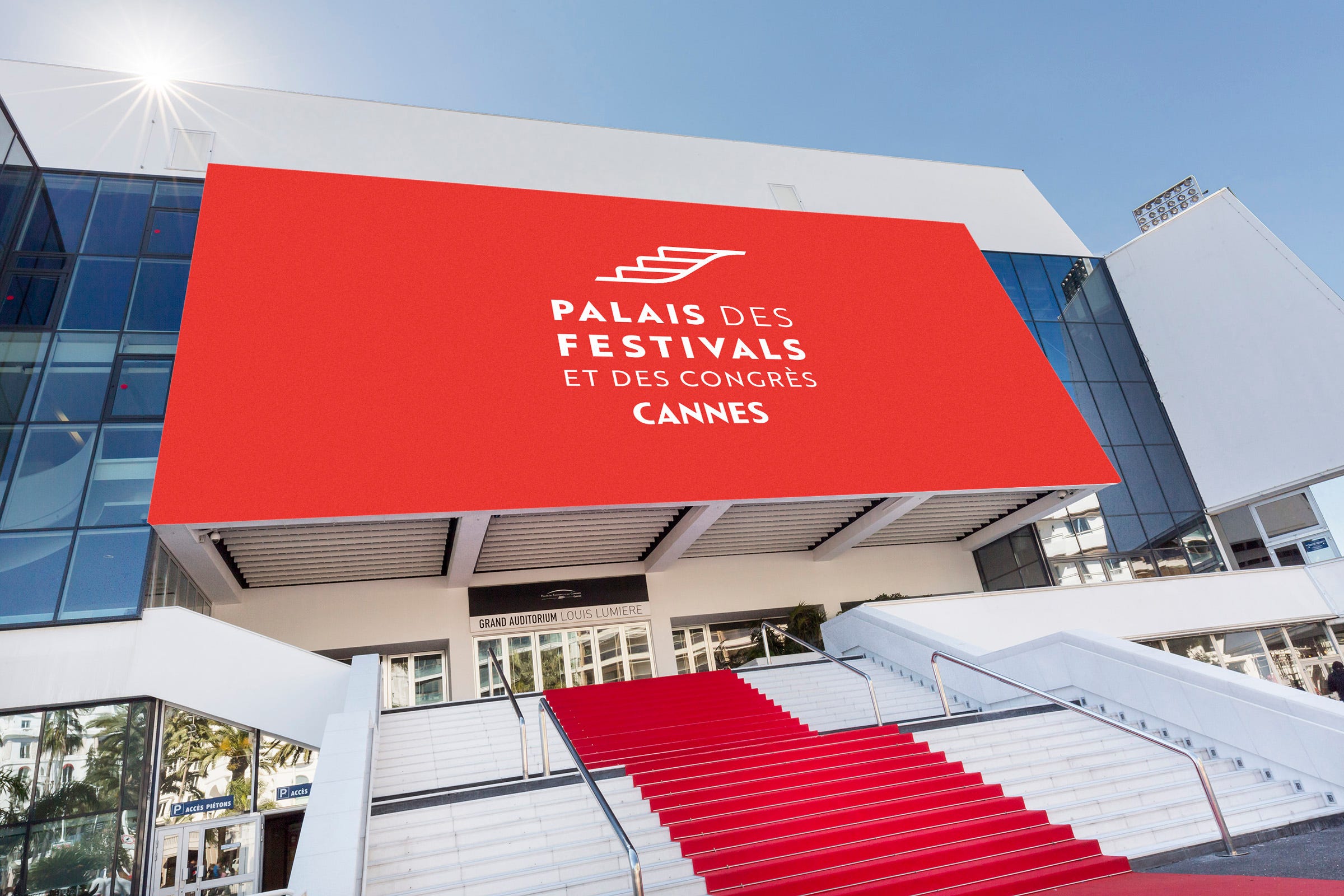
I can’t remember the last time I went to Cannes for the International Film Festival. Outside of the Palais des Festivals, I haven’t clear memories of the city of Cannes. In my mind, all the streets surrounding the Palais des Festivals look like the alleyways of Saint-Tropez. The International Film Festival helps a southern French town, like Cannes, to maintain its international reputation. On the French Riviera, Cannes is smaller than the city of Nice and bigger than the village of Saint-Tropez. All towns and villages, at the Provence in France, have their old alleyways with something that evokes the pre-industrial revolution. If the alleyways of southern France are preserved, the existence of handcrafted works will have a future in the world.
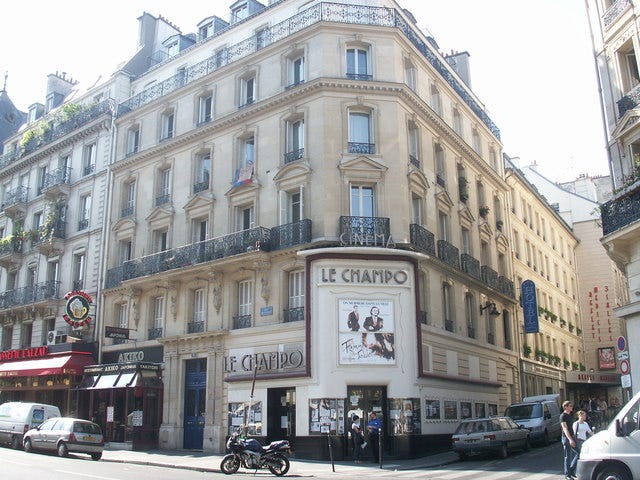
In Paris, when I was a student at the Sorbonne University, the Champollion cinema (known as Le Champo) was where I discovered a plenty of classic films. I could never list all the films I saw there: Jean Renoir’s movies, Max Ophuls’s ones, and maybe also a Louis Malle’s film? Nowadays, my memory of movies I watched at cinemas is mixed with those I saw at home. I never was an unconditional fan of the French New-Wave’s movies (« La Nouvelle Vague française »). Some of Claude Chabrol’s films are more interesting than others. Jacques Rivette and Eric Rohmer had an intellectual stance that can still be considered today anti-cinematic. François Truffaut and Jean-Luc Godard seemed to have spent their entire careers making films that were antagonistic to each other, between convention and experimentation. I used to walk down Champollion Street, after the lectures of philosophy at the Sorbonne University, to find out which films were playing at the Champollion cinema. Probably, it was the anonymous child in François Truffaut’s Day for Night that stole my memories of classic films.
Truffaut’s Day for Night is the perfect film to show the successes and failures of creating a movie with an entire cinema’s crew. In the only black & white sequence in Day for Night, the anonymous child lazily drags his cane through the solitude of a street at night, with only the lights of a movies theater enlighten the street. Behind the closed gate of the movies theater, posters of films are within reach of his hands. The child steals several posters of Orson Welles’s Citizen Kane before escaping from the empty street, in the same way that the character of Antoine Doinel (played by Jean-Pierre Léaud) runs at the end of The 400 Blows.
Now, I remember: The Garden of the Finzi-Continis by Vittorio De Sica, adapted from the novel by Giorgio Bassani. I remember watching De Sica’s movie at the Champollion cinema.


For the newest movies, I frequently went to the Mk2 Bibliothèque cinema. Almost as vast as the Lascaux caves. Close to the François Mitterrand1 site of the National Library of France (BnF). I spent countless hours in the BnF’s reading rooms. After writing essays of philosophy, I spent time to read Francophone Decadent Symbolist writers of the late 19th-century. The BnF is an amazing resource for reading the Decadent Symbolists. After all, Divagations by Stéphane Mallarmé could be read like transcendental reviews of Paris at the late 19th-century.
BnF contains also the Richelieu site. Smaller in size, the Richelieu site maintains a more royalist style than the François Mitterrand site. When I was student, the inner courtyard of the Richelieu site was under construction. I took my breaks near to the cubicles offices, facing the inner courtyard’s walkways. Leaving the Richelieu site, I crossed through the Louvre’s courtyard to reach the Seine river and return to my student room in the Quartier Latin. If I wanted to go to cinema for watching the newest movies, I walked along the Seine, from the cathedral of Notre-Dame to the Austerlitz train-station, passing by the Place de la Bastille, until I reached the François Mitterrand site. Days spent in philosophical studies, followed by long reflections in front of the Mk2 Bibliothèque cinema, for choosing which film I would to watch.


Inside the Mk2 Bibliothèque cinema, the grand escalator leading to the projection’s rooms is one of the best homages to Led Zeppelin’s Stairway to Heaven. At the end of the Mk2 Bibliothèque’s shopping center, there is a bookstore. Obviously dedicated to books on cinema, but also with some shelves filled by fiction and non-fiction books. Over the years, I realized that I was more interested by novels than films. Thanks to the bookstore of the Mk2 Bibliothèque cinema. The four towers, shaped like open books at the BnF’s François Mitterrand site, had delivered their oracle to myself.
At the projection of a movie that I can’t remind, I entered the projection’s room after the film had already started. The persistent image that comes back to my memories is Naomi Watts and Laura Harring’s one in David Lynch’s Mulholland Drive. But I never saw Mulholland Drive at the Mk2 Bibliothèque cinema. I remember that I was at a projection of Lost Highway at the Mk2 Beaubourg cinema, in Châtelet district. David Lynch has the genius to summarize the art of cinema in every sequence of his films. And isn’t the best way to honor the famous line from director Ferrand’s character, played by François Truffaut himself in Day for Night, to actor Alphonse, interpreted by Jean-Pierre Léaud (”Movies are more harmonious than life, Alphonse. There are no traffic jams in films, no dead time. Films move like trains, you understand? Like night trains.“), that David Lynch balanced Mulholland Drive with the central female duo of a blonde and a non-blonde? In their own way, Laura Harring and Naomi Watts symbolize all the characters possible in cinema. Like Marilyn Monroe & her own shadow.


Since then, I still prefer reading & listening & writing to watching. Human voices say words that phonetically go through the space until they become written words in the mind of the one who understand what is said. Actors give life to their characters in various representations of the world. For many years, I couldn’t fall asleep at night without leaving softly the radio on — as if the end of a day had to be summed up into a musical coda.
*
At the beginning of my blog A Chacun Son Goût during the summer of 2024 in Paris, I launched a series of short articles called ‘Edits’. The idea was to write texts inspired by music. I always admire the practice of writing music’s reviews: there is maybe nothing more difficult than writing on music. That’s why in my Edits series, music is only a starting point to freely talk about whatever I want. The Edit #3 was dedicated to the 3rd movement of Johannes Brahms’s Third Symphony. This 3rd movement is the theme of Anatole Litvak’s movie, Goodbye Again. Starring Ingrid Bergman and Anthony Perkins. Adapted from Françoise Sagan’s novel, Aimez-vous Brahms?
